RESOURCES
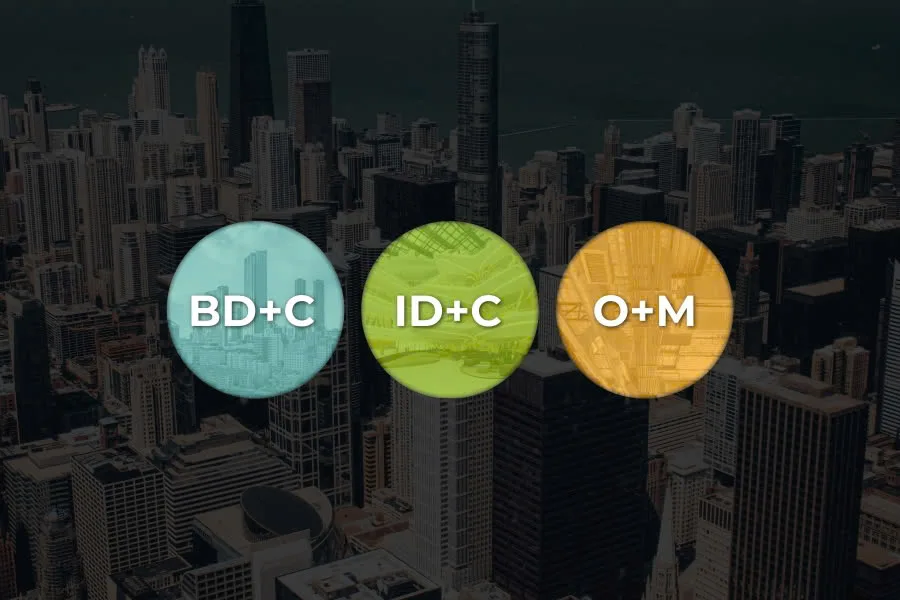
LEED BD+C vs LEED O+M vs LEED ID+C: Key Differences
LEED BD+C
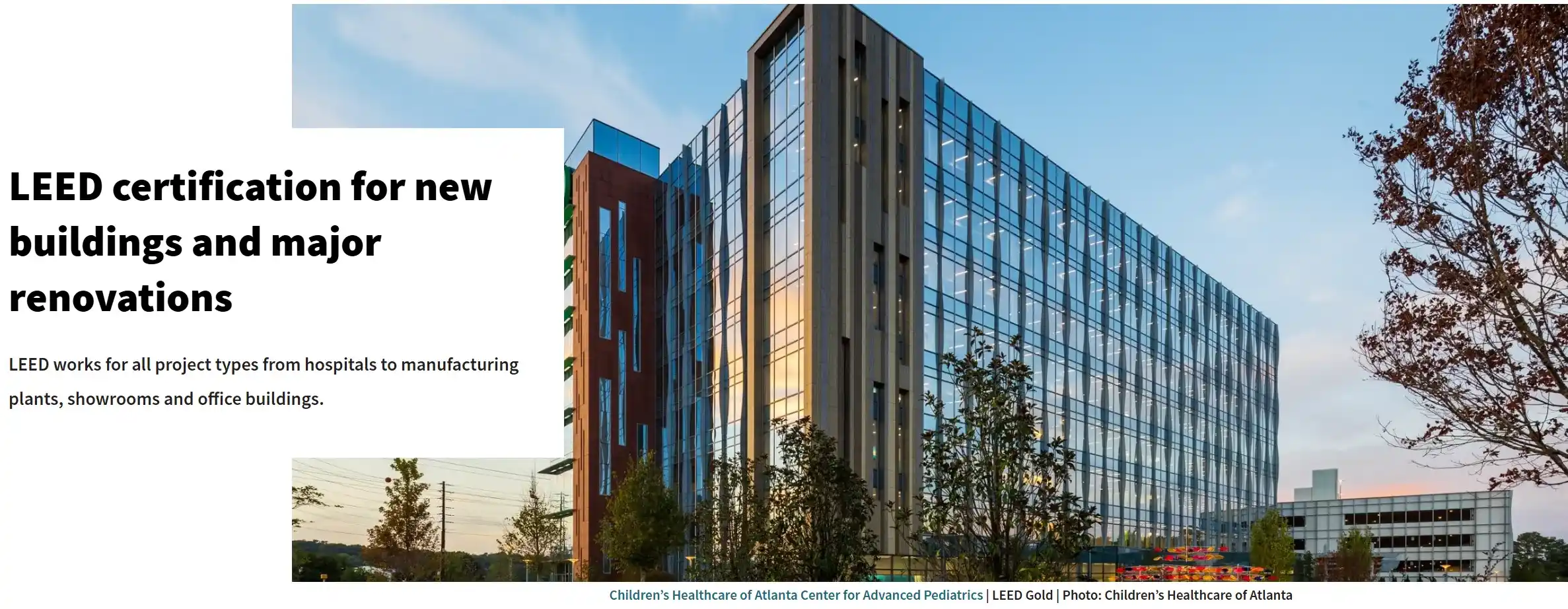
Object: Building Design and Construction (BD+C) applies to buildings constructed new or undergoing a major renovation, and it assesses the entire floor area of the building. At the time of certification, at least 60% of the floor area must be complete; if more than 40% of the area is still incomplete, the project falls under Core & Shell.
LEED BD+C applies to new construction or major renovation projects, including offices, commercial buildings, schools, data centers, warehouses and distribution centers, hotels, and hospitals. Depending on project type and the scope of completion, the Developer can select the corresponding certification type, such as New Construction, Core and Shell, Schools, Retail, Data Centers, Warehouses and Distribution Centers, Hospitality, or Healthcare.
LEED BD+C assesses all the elements that make up a new building, scoring how well sustainable solutions are integrated from the design stage. The assessment is carried out through the following credit categories:
- Location and Transportation: distance to public transit and existing amenities — this determines how occupants get around over the building’s life cycle.
- Sustainable Sites: stormwater management, heat-island reduction, light pollution.
- Water Efficiency: plumbing fixtures, water reuse, landscape irrigation.
- Energy and Atmosphere: the category with the most points. From v4.1, energy performance is scored on both cost and greenhouse-gas emissions; the building envelope follows ASHRAE 90.1-2016; a new Renewable Energy credit is added.
- Materials and Resources: material sourcing and recycled content, construction waste management — the credit structure was restructured in v4.1 to match the market.
- Indoor Environmental Quality (IEQ): ventilation, thermal comfort, daylight, low-emitting materials.
- Innovation and Regional Priority.
LEED O+M
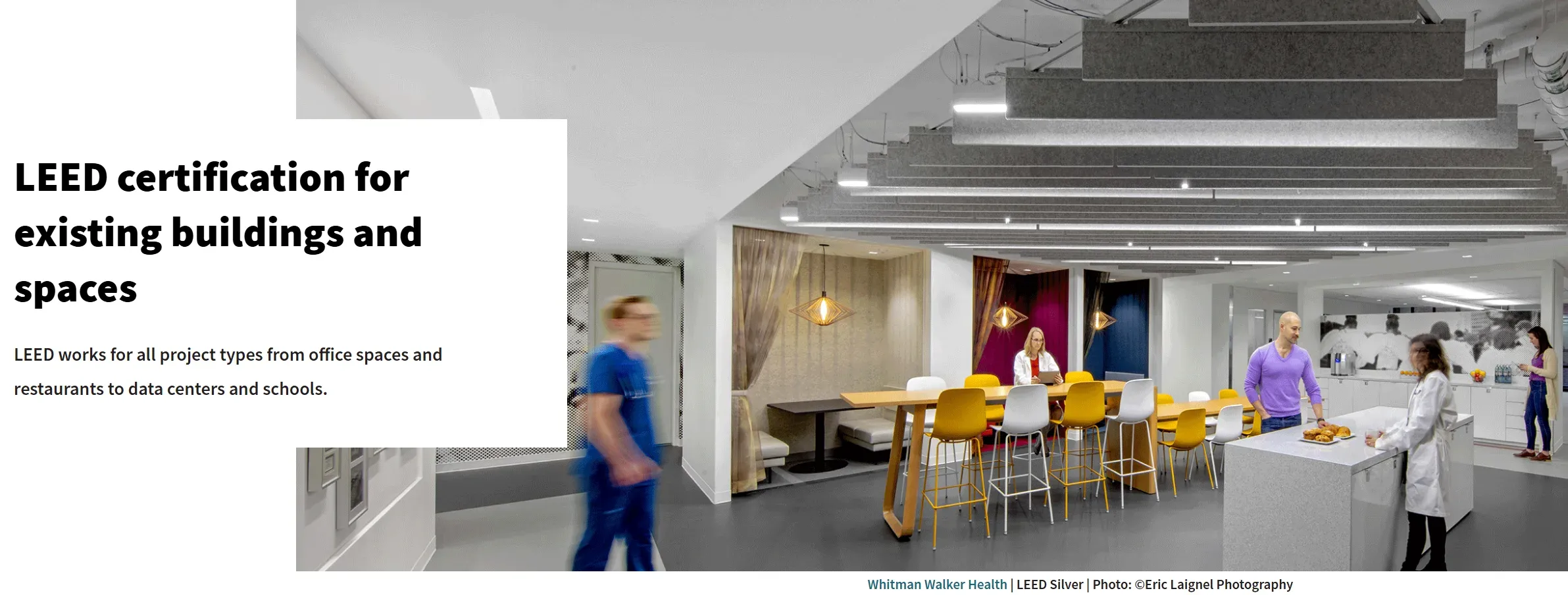
Object: LEED Operations and Maintenance (O+M) is for buildings that are fully operational and occupied for at least one year, undergoing light renovation or no new construction activity. Registration covers the entire floor area of the building; an interior space within part of a building can instead be registered under Existing Interiors.
LEED O+M assesses real-world performance during operation. The v4.1 system offers two options:
- Existing Buildings: applies to the whole existing building, covering all floor area within the project scope.
- Existing Interiors: applies to an existing interior space located within part of a building, serving commercial, retail, or hospitality functions.
LEED O+M focuses on the sustainability of building operations, indoor air quality, and the occupant experience. The assessment covers:
- Materials and Resources: prioritizing interior materials that meet low-VOC standards, helping control indoor air quality (paint, adhesives, coatings, flooring, millwork, furniture…).
- Indoor Environmental Quality (IEQ): the conditions occupants experience directly — air, ventilation, temperature, lighting, noise. From v4.1, the requirements are designed to be more practical: a simplified air-measurement option is added, and the thresholds for earning daylight and acoustic points are lowered.
- Energy and Atmosphere: lighting and electrical equipment within the interior scope, sub-metering.
- Water and Waste: fixtures within the space; managing demolition and installation waste during interior construction.
LEED ID+C
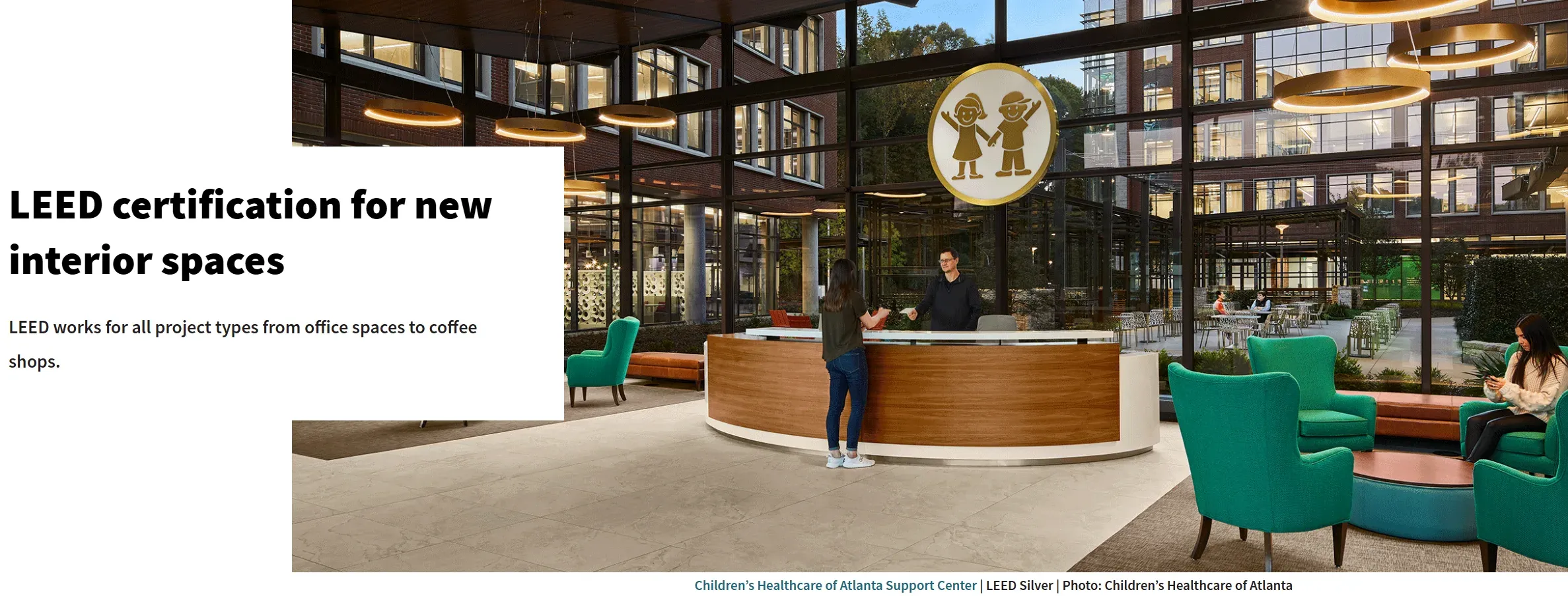
Object: LEED Interior Design and Construction (ID+C) is for projects involving a complete interior fit-out in a new or operating building. At the time of certification, at least 60% of the total floor area within the project scope must be complete. A space is considered complete when it has all the furniture, equipment, and items needed to be ready for occupancy.
LEED ID+C applies to three types:
- Commercial Interiors: commercial interior spaces, offices, and work areas.
- Retail: retail spaces, including showrooms, customer-service areas, and supporting areas.
- Hospitality: lodging spaces such as hotels, inns, and facilities providing short-stay accommodation.
A notable point is that a project does not have to certify the entire building. For example, a single office floor in a 13-story building can be registered for ID+C on just the interior area within the investment scope; likewise, a retail space within a mixed-use complex can be assessed independently if it meets the project-boundary requirements.
LEED ID+C assesses how healthy and efficient a single, self-contained interior space is — the narrowest scope of the three LEED systems. The assessment covers:
- Materials and Resources: the environmental impact of materials used in the interior fit-out. The requirements focus on low-emitting materials, chemical content, material sourcing, life-cycle impacts, and construction and demolition waste management.
- Indoor Environmental Quality (IEQ): focused on air quality, ventilation, thermal comfort, lighting, and acoustics. The criteria include VOC emission controls, post-construction air quality testing, daylight optimization, lighting controllability, and acoustic quality.
- Energy and Atmosphere: the energy efficiency of systems within the interior scope, especially lighting, electrical equipment, controls, and energy metering. Solutions that optimize energy performance and manage refrigerants are also considered.
- Water Efficiency: the water consumption of plumbing fixtures within the project scope, including faucets, toilets, urinals, and other water fixtures; water-efficient fixtures and consumption tracking are encouraged.
Version v4.1 adds more flexible options for assessing air quality, updates ventilation standards, and makes air-quality testing more accessible. At the same time, the requirements of the Daylight and Acoustic Performance credits are adjusted to encourage more projects to integrate these solutions from the design stage.
Knowledge base reference: https://www.usgbc.org/leed
=====
Related articles: