RESOURCES
TOP 4 Popular Green Building Certifications in Vietnam
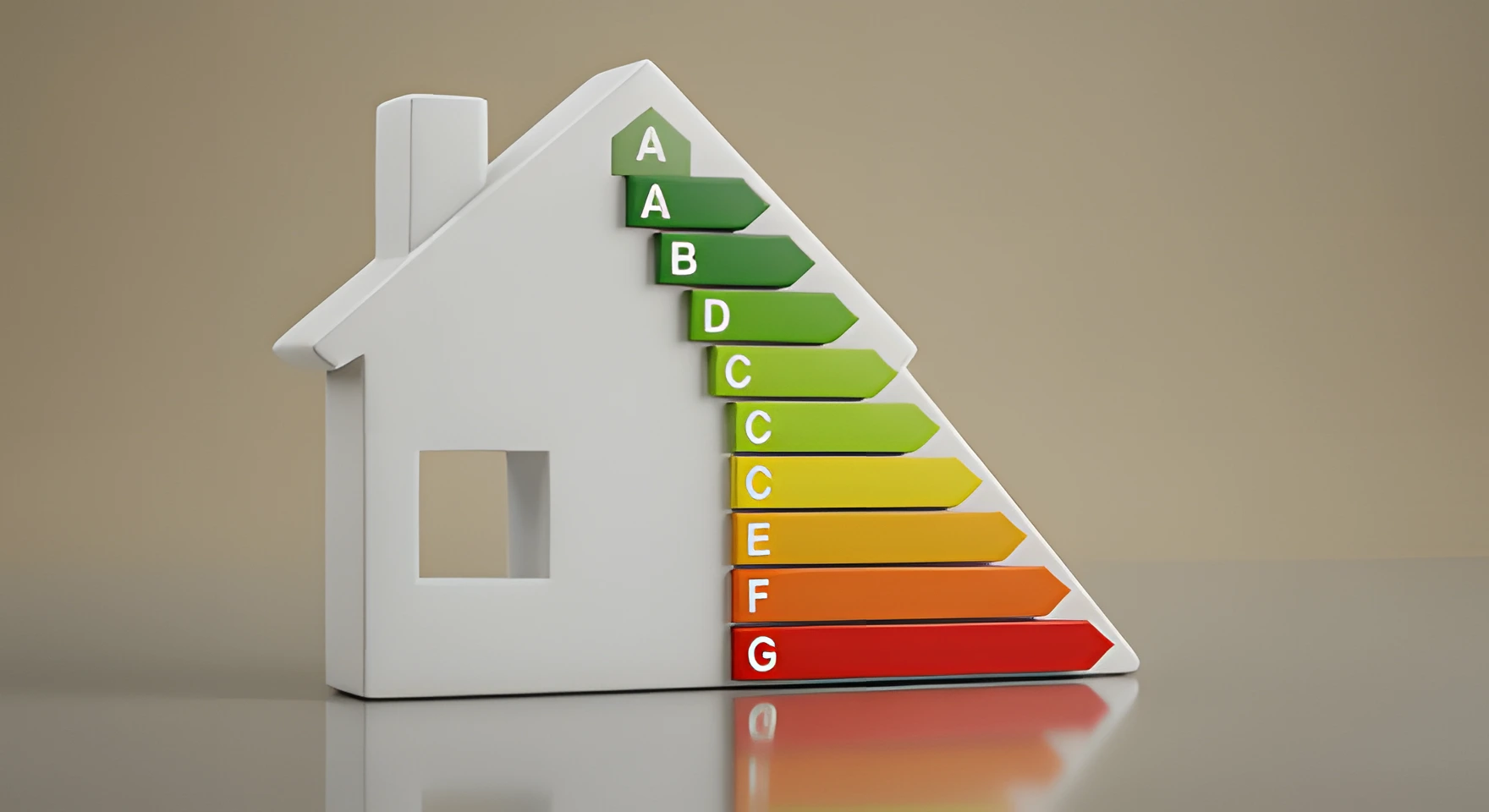
In our previous article on why green certifications matter, we established that green building certification is more than a marketing label. It provides independent verification of building performance and supports long-term financial optimization. So, among the four most common rating systems in Vietnam – LEED, EDGE, LOTUS, and Green Mark, which is the right choice for your project? The wrong choice can lead to wasted consulting costs, project delays, or failure to meet the expectations of target tenants and ESG-focused investors. This article objectively compares each system based on official documentation from the issuing organizations, helping developers make informed decisions.
1. The Green Building Market in Vietnam
As of Q2 2026, Vietnam recorded 868 certified green buildings, totaling 21,906,000 m² of Gross Floor Area (GFA) – according to the latest market report published by IFC and VGBC. In 2025 alone, 196 new projects earned a rating, marking a 20% year-on-year growth compared to 2024. The market is overwhelmingly dominated by two international rating systems: EDGE (IFC) leading with a 50.5% market share, followed by LEED (USGBC) at 37.18% – together accounting for over 87% of the entire market.
Also in 2025, Vietnam ranked among the Global Top 8 in total LEED – certified GFA outside the United States for the first time, recording 100 LEED projects encompassing 2.6 million m² in a single year (according to USGBC/GBCI statistics). This represents an extraordinary leap compared to 28th place just two years prior, reflecting the Vietnamese market’s rapidly accelerating demand for internationally recognized rating systems..
However, market popularity is not the sole selection criterion. Each rating system features distinct scopes of application, credit criteria, evaluation methodologies, and strategic development trajectories. Consequently, for the same building typology, the optimal choice may vary based on project objectives, tenant or investor requirements, capital budgets, architectural characteristics, and operational strategies. To establish an objective comparative baseline, the following sections analyze the four most prevalent green building certification rating systems in Vietnam – LEED, EDGE, LOTUS, and Green Mark – across key dimensions: administering organizations, scope, assessment criteria, building performance benchmarks, and suitability for various asset classes.
2. TOP 4 Popular Green Building Certifications in Vietnam
2.1. LEED
LEED (Leadership in Energy and Environmental Design) is a green building rating system developed by the U.S. Green Building Council (USGBC) and administered by GBCI (Green Business Certification Inc.). Established in 1995, LEED is currently utilized across more than 180 countries and territories, making it the world’s most widely adopted rating system.
LEED operates on a cumulative credit scoring framework, where projects earn points across key credit categories: Location & Transportation, Sustainable Sites, Energy Performance, Water Efficiency, Materials & Resources, Indoor Environmental Quality (IEQ), and Innovation. Registration under LEED v4.1 remains open for applicable rating systems until June 30, 2027. Following this deadline, LEED v5 will become mandatory for all new registrations across commercial rating systems including BD+C, ID+C, and O+M.
Explore further details on LEED v5 at: Series LEED v5
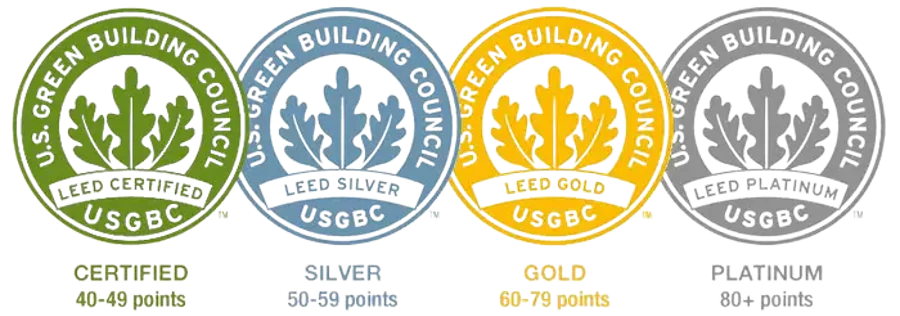
LEED awards four tiers based on total points:
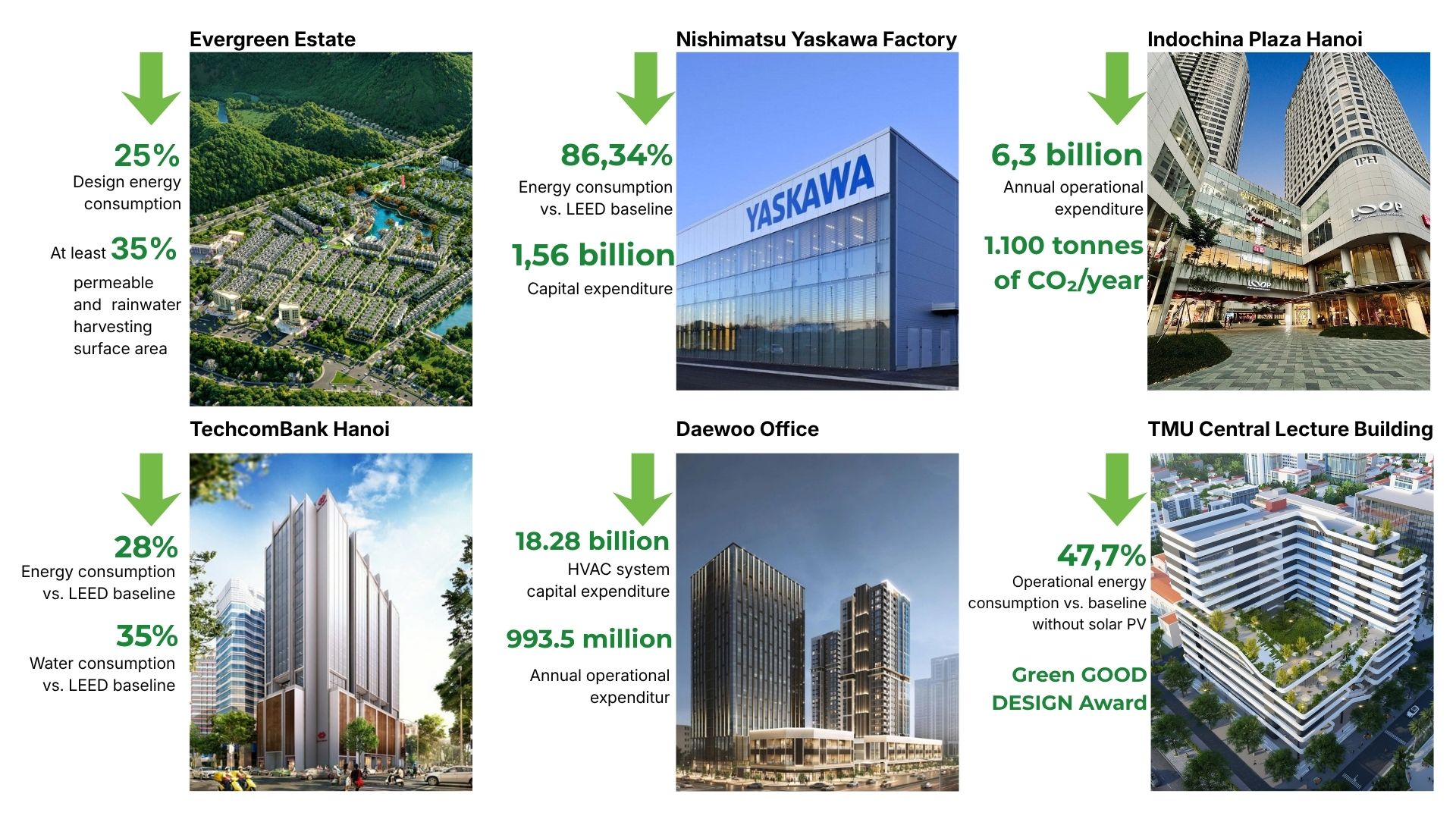
Notable LEED – certified projects in Vietnam:
2.2. EDGE
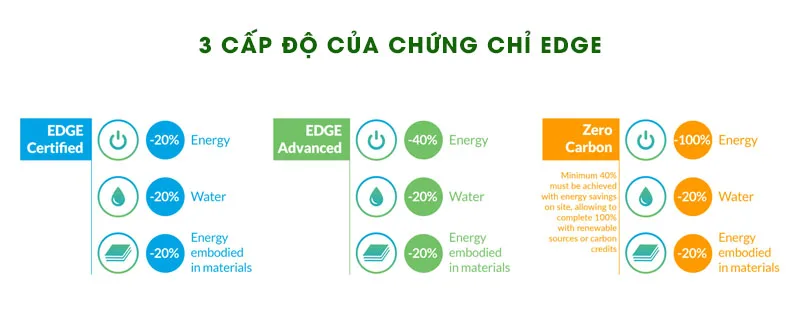
EDGE (Excellence in Design for Greater Efficiencies) is a green building standard developed and administered by the International Finance Corporation (IFC), a member of the World Bank Group. The fundamental differentiator of EDGE lies in its targeted methodology: rather than conducting a multifaceted, comprehensive evaluation, EDGE focuses strictly on the three core resource efficiency metrics that every project can measure and control: Energy, Water, and Embodied Energy in Materials. To achieve EDGE, a project must demonstrate a minimum reduction of 20% across all three categories relative to a standardized local baseline – the origin of the well-known “20-20-20” threshold.
It is no coincidence that EDGE holds a 50.69% market share in Vietnam with 440 certified projects as of Q2 2026. EDGE appeals strongly to the market due to its pragmatism and compatibility with fast-track, mass-market real estate developments. A strategic asset of EDGE is its cloud-based, free evaluation software, which allows Developers and Consultants to model expected savings and incremental CAPEX early during schematic design. This enables empirical, data-driven decision-making rather than intuitive guesswork. Combined with registration and certification fees that are typically lower than LEED, EDGE serves as an ideal solution for commercial residential developments, high-rise condominiums, industrial manufacturing facilities, and mid-scale real estate projects seeking to optimize initial capital expenditure.
EDGE offers three certification levels:
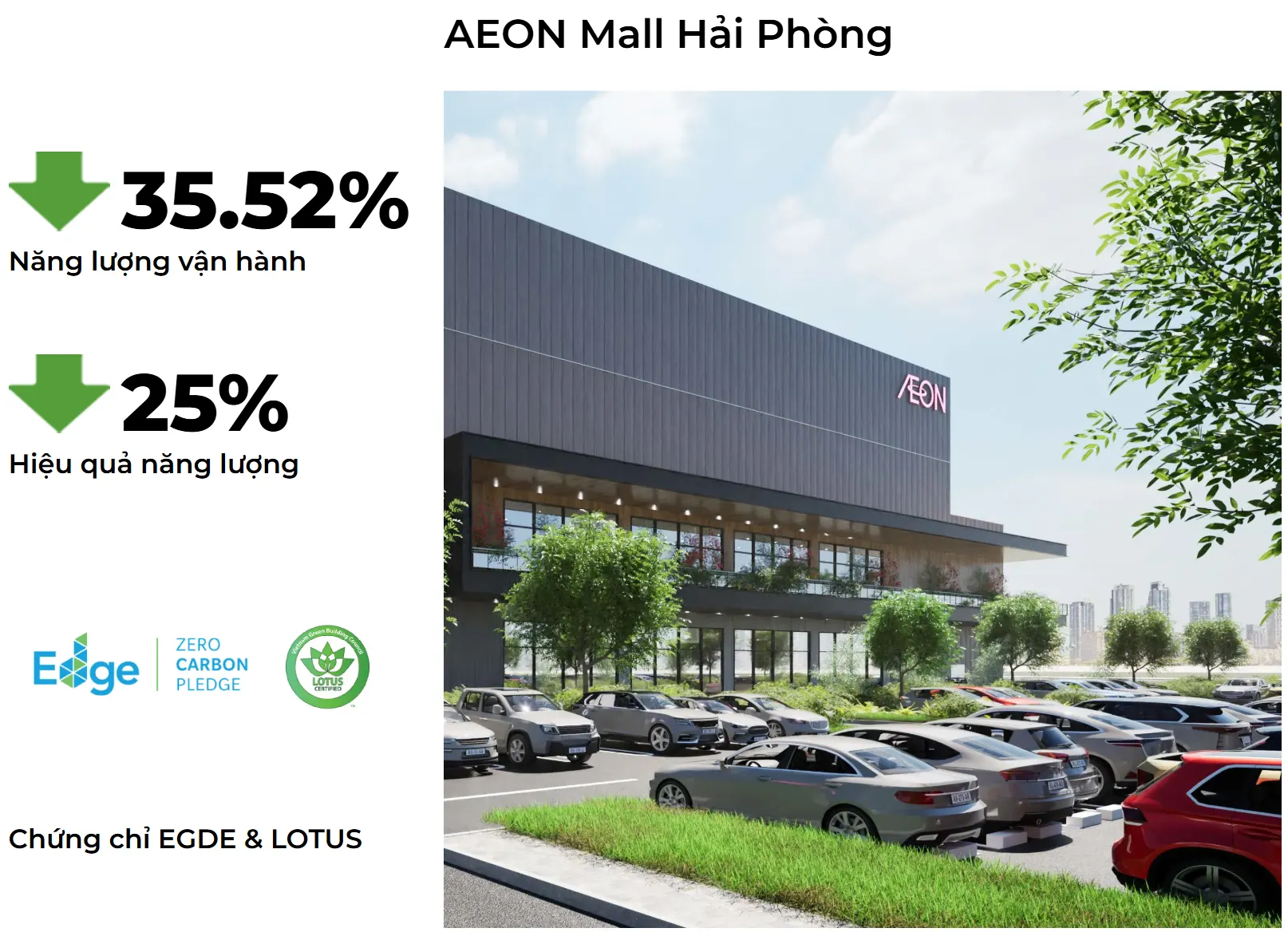
Notable EDGE-certified projects:
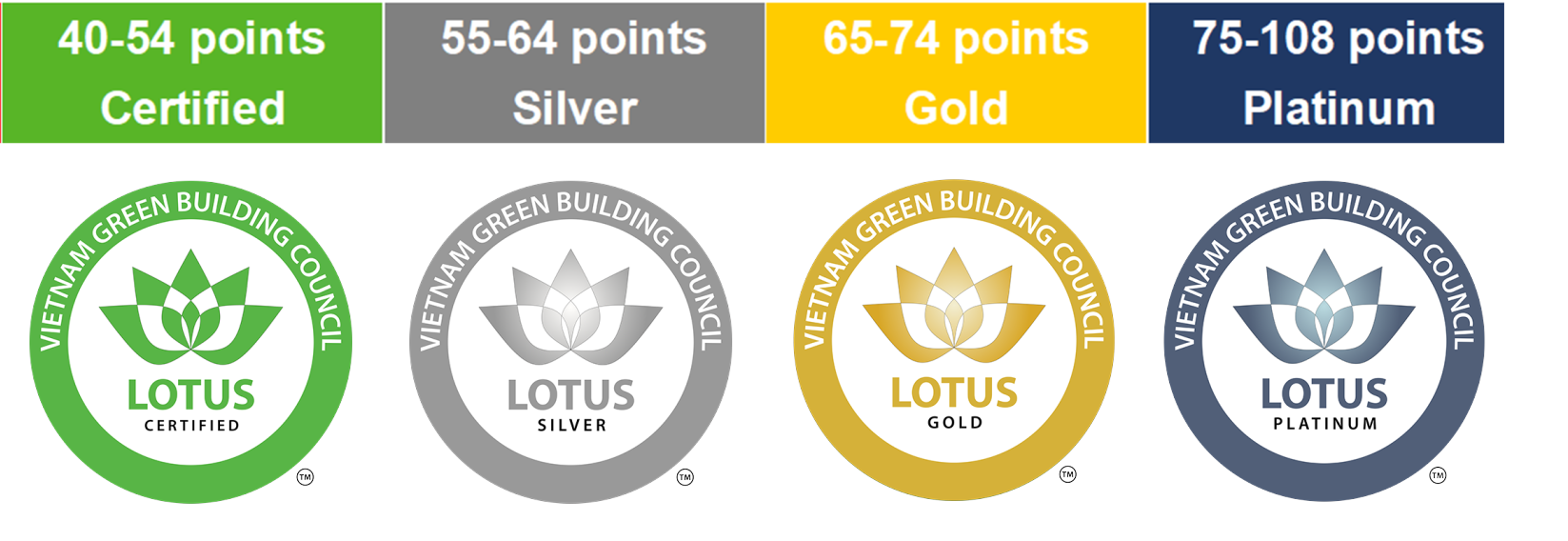
2.3. LOTUS
- LOTUS NC (New Construction): For newly built facilities.
- LOTUS BIO: For master-planned urban developments and eco-industrial parks.
- LOTUS Homes: For detached residences, villas, and row houses.
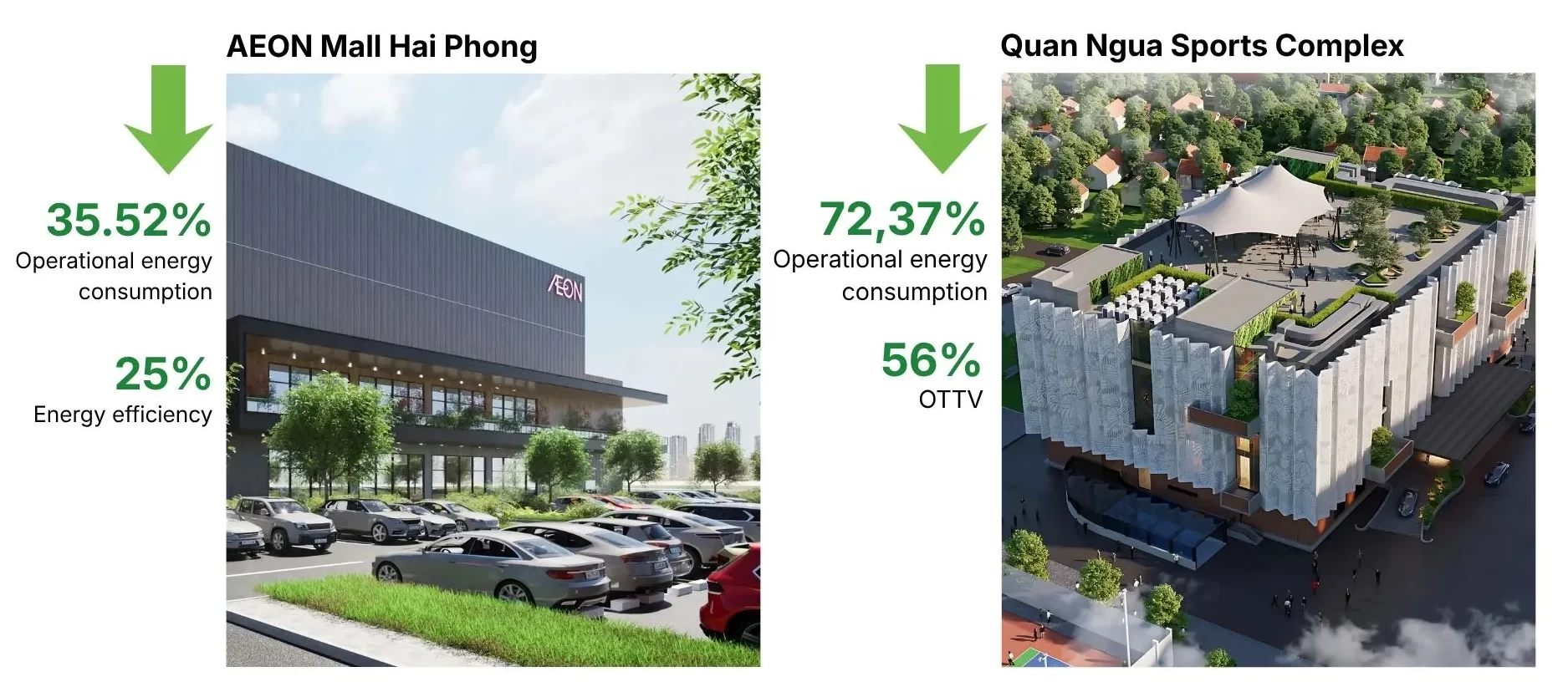
Notable LOTUS-certified projects:
2.4. Green Mark
The Green Mark Certification Scheme is Singapore’s national rating scheme,, developed by the Building and Construction Authority (BCA) of Singapore. Launched in 2005 to address energy efficiency challenges in Singapore’s tropical climate, Green Mark is widely adopted across Southeast Asia, including Vietnam.
In Vietnam, Green Mark holds approximately 6.5% market share, primarily utilized in developments funded by Singaporean developers, regional Southeast Asian investment partners, or projects specifically targeting multinational corporate tenants from Singapore and neighboring economies.
The defining hallmark of Green Mark is its intense focus on operational energy performance and climate-responsive passive design measures tailored to hot and humid environments: from orientation optimization and envelope solar shading to natural ventilation strategies. The current standard, Green Mark 2021 (GM:2021), launched in April 2021 and officially implemented on November 1, 2021, was refined following extensive industry consultations with organizations including the Singapore Green Building Council (SGBC). Green Mark 2021 evaluates projects across six sustainability pillars: Energy Efficiency, Intelligence, Health & Wellbeing, Total Resilience, Carbon Frontrunner, and Whole Life Carbon.
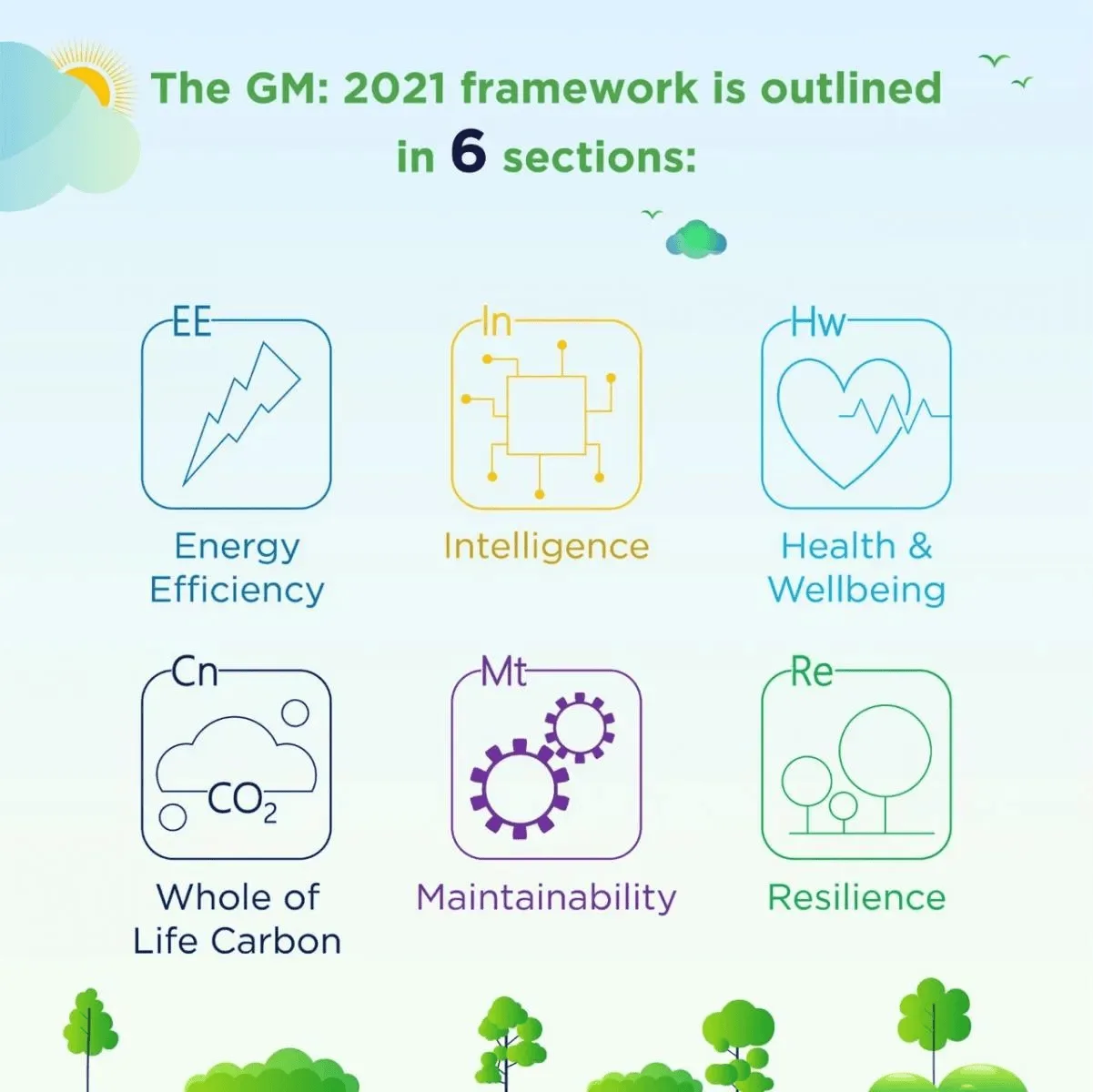
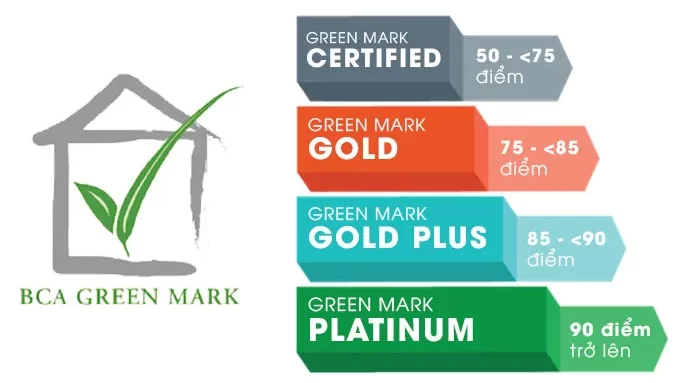
Green Mark tiers include:
- GM Gold: (> 40% energy savings) – Applicable only to existing buildings undergoing recertification without major chiller plant upgrades.
- GM Gold Plus: (> 50% energy savings).
- GM Platinum: (> 55% energy savings).
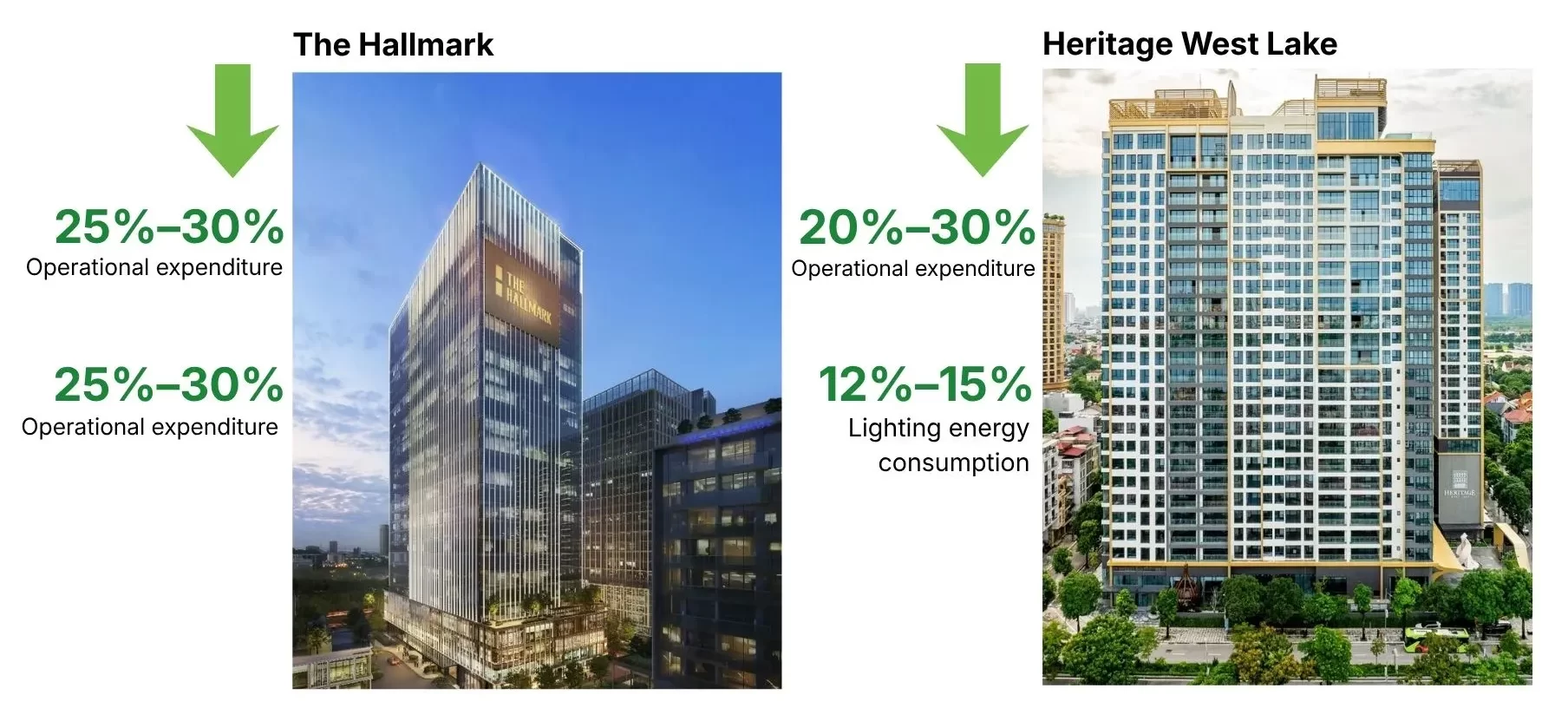
Notable Green Mark-certified projects:
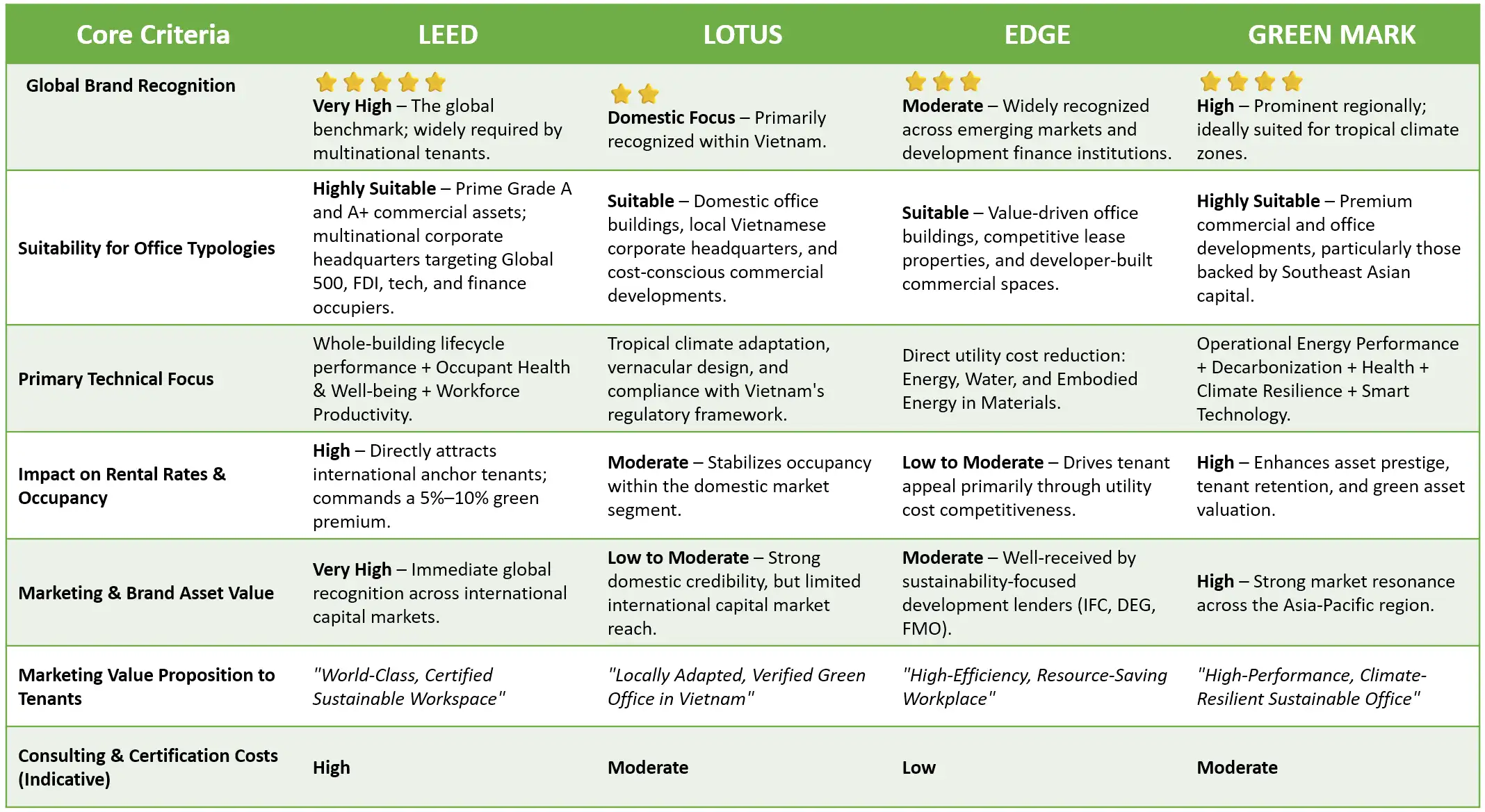
3. Which green building certification is suitable for your project?
=====
Related Articles: